Chronic Stress and Women’s Physical Symptoms
If you’ve ever experienced fatigue, hormonal irregularity, bladder issues, digestive problems, sleep problems, pelvic pain, and many other “lady issues”, you’ve probably been told these symptoms are “just stress.” While that can feel dismissive, there is an important physiological truth underneath it that we must understand in order to address the symptoms:
Chronic stress doesn’t stay in your head, it changes how your body functions.
Understanding how chronic stress affects the female body is a critical part of improving women’s healthcare. Stress is not just emotional. It affects you on a deeper neurological, hormonal, muscular, and metabolic level.
What Is Chronic Stress, Really?
Chronic stress occurs when the nervous system remains in a prolonged state of threat or high alert. Instead of cycling between activation and recovery, the body becomes stuck in “on” mode. Today we often hear this being referred to as being stuck in “fight or flight mode.” Our body struggles to regulate back to a resting state which can wreak havoc on our bodies systems.
This leads to nervous system dysregulation, meaning the balance between the sympathetic (fight-or-flight) and parasympathetic (rest-and-digest) systems is disrupted.
Over time, this affects many aspects of the body including muscle tone, hormone production, pain processing, immune function, recovery capacity, and more.
In women, these effects often don’t simply show up as emotional symptoms you may think of when it comes to stress. It also shows up as physical symptoms.
How Stress Affects the Body in Females
When the brain perceives ongoing stress, it activates the hypothalamic-pituitary-adrenal (HPA) axis. This increases cortisol and adrenaline output, shifting the body into survival mode. Over time, this nervous system dysregulation can impact multiple systems at once: muscles, hormones, digestion, immunity, and even tissue recovery.
In women, these effects often show up as physical symptoms such as pelvic pain, bladder urgency, irregular cycles, worsening PMS, digestive issues, fatigue, and heightened pain sensitivity. These signs are not isolated problems, they reflect how the body reallocates resources under stress, prioritizing immediate survival over reproduction, repair, and optimal hormonal function.
Understanding how stress affects the body in females from a whole-body or whole-person perspective helps explain why “just relax” advice rarely works. Chronic stress is not only psychological; it is metabolic, hormonal, and inflammatory. Addressing it effectively requires supporting the nervous system, regulating hormones, improving digestion, enhancing recovery, and balancing movement. It requires a whole-person approach to care and that’s exactly why we prioritize this at Revitalize.
Chronic stress symptoms in women are signals and they provide a roadmap for better, more individualized care.
The Link Between Stress and Pelvic Floor Function
One of the most overlooked connections in women’s health is how stress affects pelvic floor muscle tone.
Under chronic stress:
Muscles tend to hold tension as a protective strategy
The pelvic floor may remain contracted instead of cycling normally
This can contribute to pain, bladder symptoms, and difficulty fully relaxing
If the nervous system stays in a heightened state, the pelvic floor may never receive the signal that it is safe to let go.
This is why stress and women’s health are inseparable topics, you cannot fully treat pelvic symptoms without understanding the neurological environment they exist in.
Hormones, Recovery, and Stress Load
Chronic stress also interferes with hormonal balance by prioritizing survival hormones over reproductive hormones. Estrogen, progesterone, and thyroid function can all be affected when cortisol remains elevated.
This helps explain why many women experience cycle changes during high-stress periods, worsening PMS, increased pain sensitivity, and poor sleep and slower recovery
The body is not broken, it is adapting to perceived threat. In order to help the system recover, the first step is teaching your body that it doesn’t need to stay in survival mode all the time.
Rather than asking:
“What’s wrong with me?”
We can ask:
“What is my nervous system responding to?”
This is where whole-person women’s healthcare becomes essential. Supporting the body means supporting:
Nervous system regulation
Muscular balance
Hormonal signaling
Recovery pathways
Not just chasing symptoms one by one which is all too common in the traditional medical field.
Supporting the Nervous System
Because chronic stress symptoms in women are rooted in physiology, effective support must also be physiological.
Tools that encourage parasympathetic activation and recovery such as heat exposure (like sauna) and guided brain-based (like Brain Tap) relaxation work by:
Lowering baseline muscle tone
Improving circulation
Reducing stress hormone output
Supporting recovery and sleep
These approaches work because they shift the nervous system out of survival mode and back into regulation.
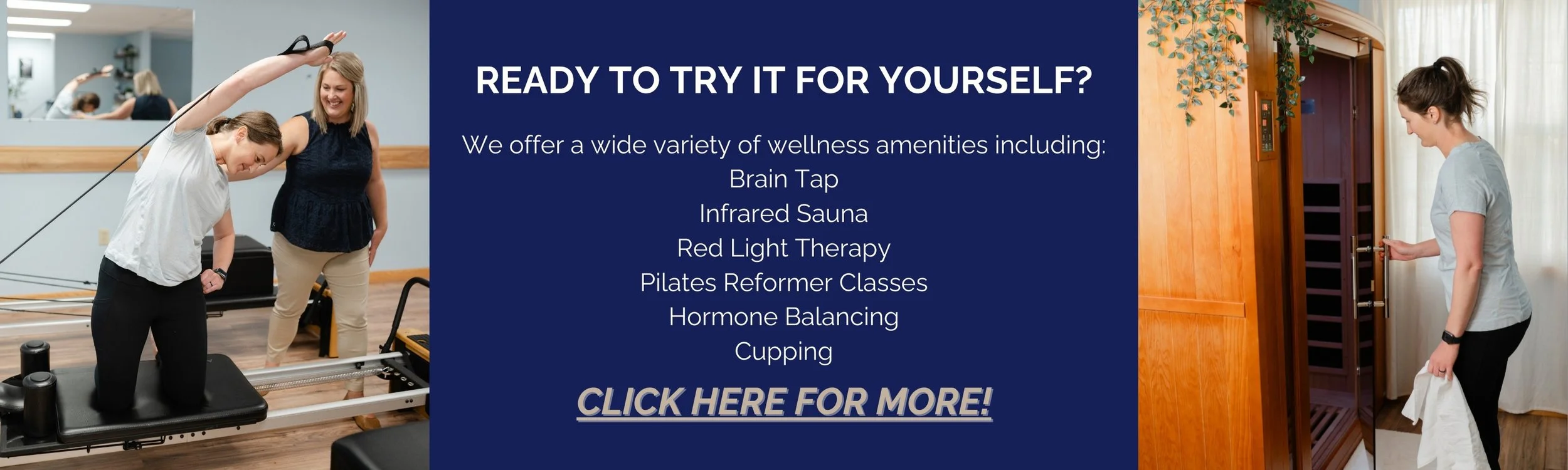
At Revitalize, we offer Sauna, Brain Tap, Red Light Therapy, and Pilates Reformer classes to help shift your body from fight-or-flight to rest-and-digest.
A New Model for Women’s Health
Women’s symptoms are often compartmentalized and women’s care is treated as such. You see one doctor for pelvic pain, another for hormones, another for back pain, etc. But the body does not operate in silos and this is where whole-person care is so important!
Revolutionizing women’s healthcare means treating the system, not just the symptom.
By recognizing the interconnected impact of stress and women’s health, we move beyond simply managing symptoms. At Revitalize, we treat the whole person and we don’t dismiss what you’re feeling or hand you quick fixes. Instead, we dig deeper to identify the root cause of your symptoms by addressing the system. Our goal is to help you restore balance, prevent recurring issues, and regain confidence in your body.
If something doesn’t feel right, you don’t have to figure it out on your own. We are here to give you individualized care to help you move forward with confidence.
Schedule your consultation today and start addressing the root cause of your symptoms, not just the symptoms themselves. Book an evaluation!
Frequently Asked Questions
-
Yes. Under chronic stress, muscles, including the pelvic floor, often stay tight as a protective response. This can lead to pain, bladder symptoms, and difficulty fully relaxing. Treating pelvic issues effectively requires addressing the nervous system, not just the muscles themselves. We can help! Book an evaluation today!
-
Chronic stress elevates cortisol and other survival hormones, which can suppress reproductive hormones like estrogen and progesterone. This hormonal shift can disrupt cycles, worsen PMS, increase pain sensitivity, and affect libido or recovery after exercise.
-
Supporting your nervous system and whole-body recovery is key. Techniques like sauna, guided brain-based relaxation (Brain Tap), red light therapy, and Pilates can help shift your body from “fight-or-flight” to “rest-and-digest,” lowering muscle tension, balancing hormones, improving circulation, and supporting sleep and recovery. We offer all of these options at Revitalize!
-
Instead of treating each symptom in isolation, whole-person care addresses the interconnected systems such as nervous, muscular, hormonal, and metabolic. By understanding what your nervous system is responding to, we can tackle the root causes rather than just chasing symptoms one by one.