

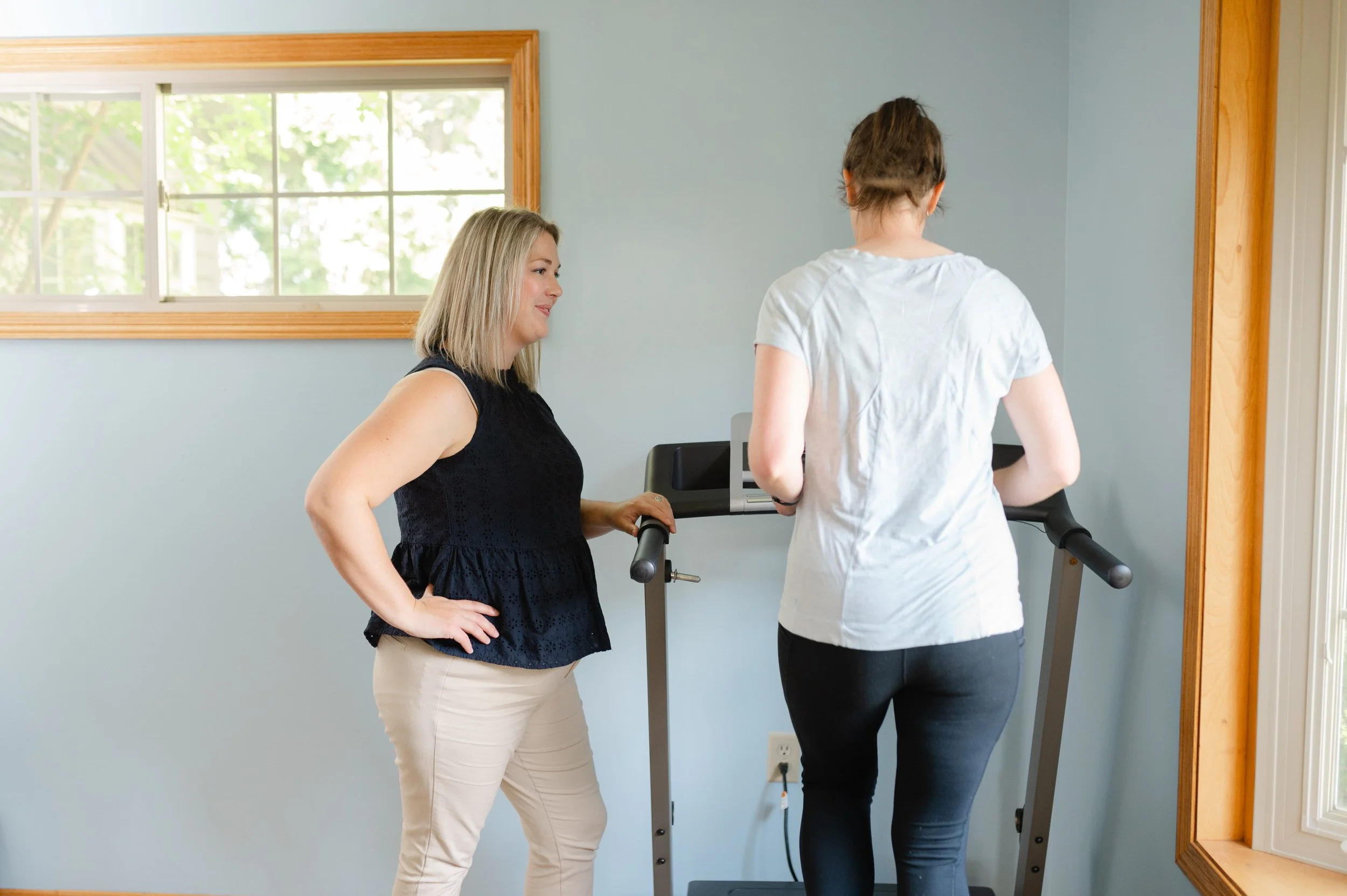
Postpartum Return to Running Support in Milwaukee
Rebuild strength, stability, and confidence so running feels good again postpartum
Does This Sound Like You?
Why This Happens
Trying to return to running postpartum can feel frustrating, overwhelming, and confusing especially when your body doesn’t feel the same after having a baby.
Many women are simply told to wait until they are “cleared” at six weeks postpartum before returning to exercise, even though the body hasn’t fully recovered and rebuilt the strength and stability it needs to tolerate impact well.
As a result, many women experience symptoms like leaking, heaviness, pain, instability, or poor recovery and often feel like their body (and running) never fully returns to what it was before pregnancy.
Common Postpartum Symptoms With Return To Running
Leaking with running or jumping
Pelvic heaviness or pressure
Core weakness or feeling “disconnected”
Hip, SI joint, or low back pain
Pain with impact or longer runs
Feeling unstable or less supported while running
Increased fatigue or slower recovery after workouts
One of the biggest missing pieces for many postpartum runners is rebuilding strength and stability alongside running itself. But returning to running postpartum is about more than just rebuilding endurance because the body’s systems all work together.
Contributoring Factors That Influence Postpartum Return To Running
Pelvic floor, core, and hip strength and coordination
Pressure management with the pelvic floor
Running mechanics and force transfer
Nervous system regulation and resilience
Sleep and overall recovery capacity
Nutritional demands for recovery and rebuilding
Gradual impact progression and strength training
Because all of these systems work together, postpartum return to running often requires more than simply waiting longer, pushing through symptoms, or trying to find a different running program.
Our whole-body approach to postpartum return to running in the Milwaukee area helps rebuild strength, improve pelvic floor and core function, and help you safely return to running with better support and confidence.
Why Our Approach Is Different
Most women are dealing with multiple symptoms at once and trying to find the root cause. But the body doesn’t work in isolated parts so rarely is there one root cause. Instead, the body functions as connected systems, where everything influences everything else.
That’s why treating symptoms separately or seeing different providers for each issue, often leads to confusion, overlap, and incomplete results, leaving you to try to piece everything together on your own.
It ends up taking more time, energy, and mental bandwidth to figure out what’s actually going to work.
To create real, lasting change, you have to understand how everything is connected and address the biggest drivers first.
That’s exactly what we do with our approach.
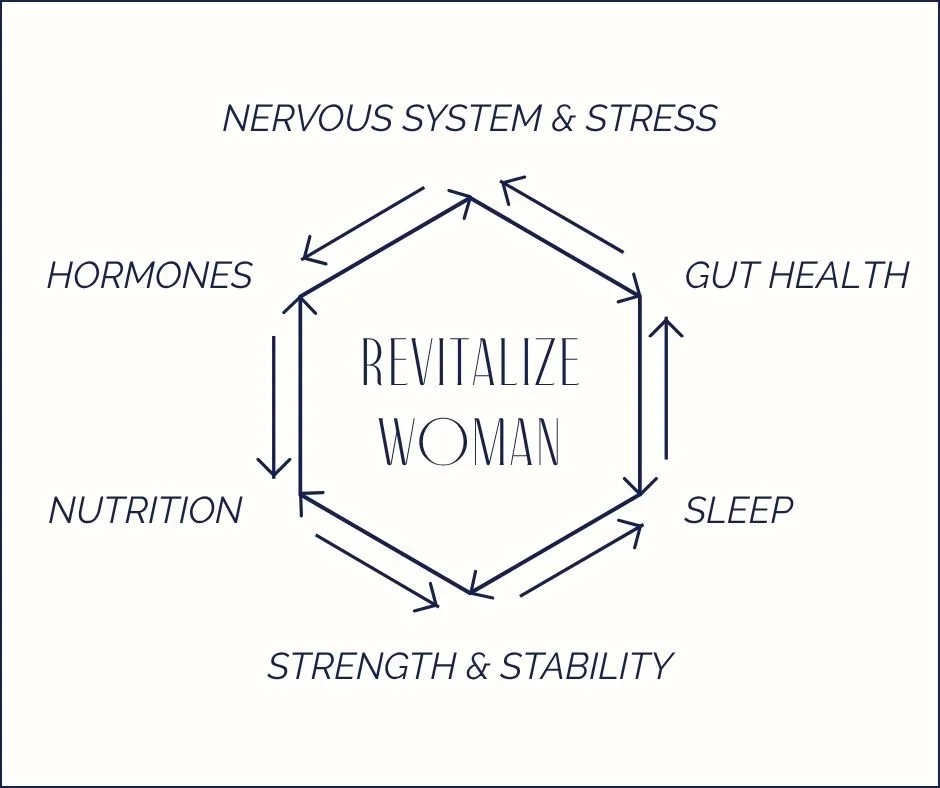
Find out which systems are impacting you by taking this quick, 2-minute women’s health assessment HERE.
Stop Guessing And Hoping It Just Gets Better
We’ll help you understand what’s actually causing your symptoms and give you a clear plan to move forward.
Real Results From Other Women
“I’ve been [working with Revitalize] and it has been the best experience. I started coming at 5 months postpartum due to healing issues with my tear from birth and it has really helped feel back normal. Only a month or so in and feeling 10x better! Highly recommend for anyone postpartum looking to get back to normal!”
-Jennafer Z.
Choose Your Next Steps
-

Learn what your body actually needs to safely and confidently return to running postpartum.
-

Identify the top systems impacting your body and where to focus first with our quick, 2-minute assessment
-

Stop the guesswork and get clear answers with a personalized plan by starting with an evaluation.
Frequently Asked Questions About Returning to Running Postpartum
-
While many women are “cleared” to exercise at six weeks postpartum, that does not always mean the body is fully ready to tolerate running and impact. Recovery timelines vary depending on strength, pelvic floor function, core coordination, sleep, recovery, symptoms, and overall resilience. Many women benefit from gradually rebuilding strength and stability before returning to running.
-
Leaking during running or exercise is common postpartum, but it is not something you simply have to accept. Symptoms like leaking can be a sign that the pelvic floor, core system, pressure management, or overall support system is not tolerating impact well yet.
-
Feelings of heaviness or pressure during running can occur when the pelvic floor and core system are struggling to manage impact and pressure effectively. Weakness, tension, poor coordination, reduced strength, fatigue, and returning to impact too quickly can all contribute to these symptoms.
-
Pregnancy and postpartum recovery can affect abdominal strength, pelvic floor support, breathing mechanics, posture, force transfer, and overall stability. Even women who are exercising regularly may still need more targeted strength and coordination work to fully rebuild support for running.
-
Not necessarily. Many women can continue running with modifications while working to improve strength, pressure management, recovery, and overall resilience. However, worsening symptoms like leaking, heaviness, pain, or instability are signs the body may need additional support and rebuilding before progressing further.
-
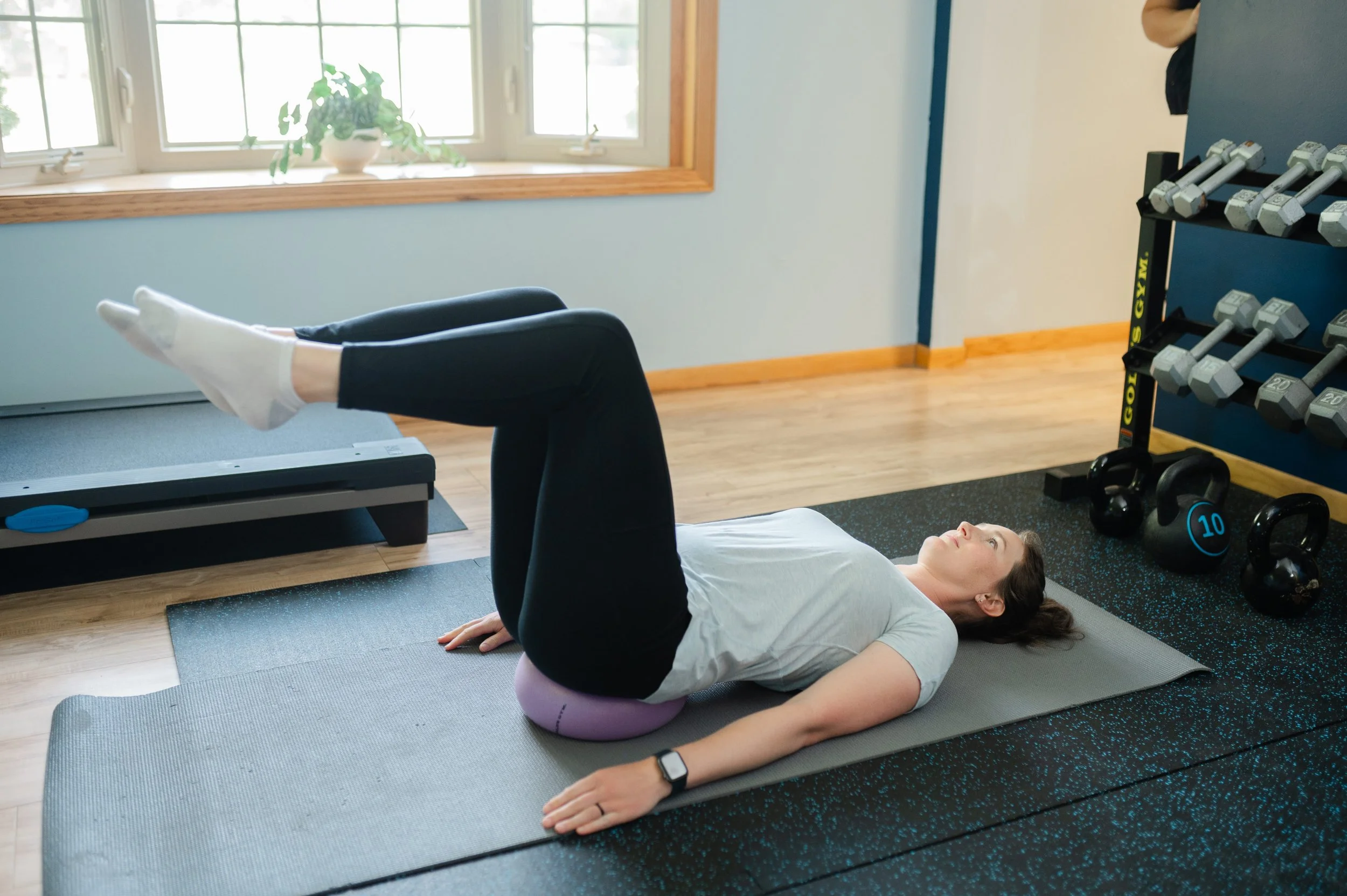
Strength training is one of the most important parts of returning to running postpartum. Building strength through the core, pelvic floor, hips, glutes, and lower body helps improve stability, force transfer, impact tolerance, and overall running resilience. Many women are running without fully rebuilding these foundations first.
-
Yes. Core weakness and diastasis recti can affect abdominal support, pressure management, stability, and force transfer during running. This can contribute to symptoms like leaking, heaviness, low back pain, hip pain, or feeling unstable while running postpartum.
-
Longer runs, higher mileage, speed work, and harder workouts place greater impact and recovery demands on the body. If strength, recovery, pelvic floor function, sleep, nutrition, or nervous system resilience have not fully recovered postpartum, symptoms may worsen after higher training loads.
-
Our whole-body approach focuses on rebuilding strength, pelvic floor and core function, stability, pressure management, recovery, movement mechanics, and overall resilience so you can feel stronger, more confident, and better supported returning to running postpartum.
-
Yes. Revitalize Physical Therapy provides postpartum return to running support in Milwaukee for women dealing with leaking, heaviness, pelvic floor symptoms, pain, core weakness, instability, and difficulty returning to running confidently after having a baby.